
Africa 2023 – Zambia and Malawi
By Jay Lappen, Chief Commercialization Officer, Altris LLC
In the late spring of 2023, Altris was invited to present its circular eco-energy solutions to the Ministries of Energy in Zambia and Malawi. At the time, only 42 percent of Zambians and 19 percent of Malawians had consistent access to power. That’s less than half the population in Zambia and just one in five in Malawi. Numbers like that sound abstract until you stand in the dark and realize what they mean.
Our opportunity to help began as something entirely different. Our African partner, Obinna of ACSG, had learned that Sudan was seeking proposals for a large-scale Power Purchase Agreement (PPA). Within days, Altris CEO Mark Polson and I built a detailed proposal for a 1,000-megawatt power system—complete with the engineering, financing, and logistics needed to deliver it. But just as the ink dried, Sudan erupted in civil war. The deal was gone before it began.
That collapse, though, became the turning point. Obinna shared our proposal with his contacts in Zambia and Malawi, who immediately saw potential. Within a week, we were invited to present. Seven days later—after six vaccinations and a blur of logistics—I was boarding a plane with Earl Kemp, our Executive Managing Director and a man whose career in engineering and construction management spanned over five decades and more than $60 billion in global projects.
Arrival in Zambia
Thirty-four hours later, we arrived in Lusaka—Earl’s 6’2” frame and my 6’4” frame didn’t do us any favors on that flight. Jet-lagged but energized, we gathered with members of our local team that evening, including Obinna, Nkechi Ajih, and Patricia V., a respected former Zambian Supreme Court justice who had become a vital supporter of our project. Gaither from Westland Construction joined us as well, representing our EPC partner.
The next morning, government drivers took us through the heart of Lusaka to the Ministry of Energy, where I presented directly to the Hon. Eng. Peter Chibwe Kapala and his staff. Initial presentations like this are critical and tricky to get right since Altris’s solar and engine technology is both familiar and foreign—an evolution of what they know and a challenge to what they expect. We improve on every aspect of conventional solar PV and engine technologies.
As I spoke, I realized how fortunate we were that Minister Kapala himself was a trained engineer from the private sector. He understood the nuance. Our proposal centered on deploying 500 megawatts of firm solar-thermal power using Altris’s X3 Engines and advanced thermal storage—a leap beyond PV panels that merely collect sunlight.
Halfway through, the Minister stopped me. He said their standard process for approving a PPA can take four to five years. My heart sank—until he smiled. He wasn’t warning me. He was rewriting the rules. He said he wanted to do things differently, to invert the process entirely: grant us a conditional PPA immediately, contingent on a due diligence trip to the United States.
It was the kind of pivot you can’t plan for. We left that meeting stunned but exhilarated. That evening, we hosted a private dinner with Minister Kapala and ZESCO Managing Director Victor Mapani. Victor was sharp, pragmatic, and technically curious. He asked questions that told me he wasn’t just evaluating our technology—he was imagining how it could change his country’s grid. By the end of dinner, he was on board with the due diligence plan.
The first miracle had happened.
The Malawi Opportunity
From there, we flew to Lilongwe, Malawi, to meet the Secretary to the President and Cabinet (SPC). The SPC’s office was the functional equivalent of a vice presidency—an anchor of authority and influence. Through Obinna’s relationships, we were invited to present both our power and fertilizer solutions.
Our main proposal for Malawi was a 300-megawatt solar-thermal system—smaller than Zambia’s but tailored to their grid—and an additional initiative to localize fertilizer production using Altris’s biochar technology. Malawi was importing roughly 400,000 metric tons of fertilizer every year. We could end that dependence by turning their agricultural waste into high-quality biochar, wood vinegar, and tar for construction.
The first presentation to the Ministry of Energy was packed with engineers, policymakers, and advisors. By the third slide, I paused and told them to reset their expectations. “Forget what you know about solar,” I said. “This isn’t PV. This is a paradigm shift.” I asked them to suspend what they knew about solar and engine technology—to see energy generation from a new perspective.
By the fifth slide, I saw the lightbulbs go off around the room. They began asking sharper questions, and I watched their curiosity evolve into excitement. Our system offered better collection, a more efficient and cleaner engine, and more effective energy storage than any conventional PV setup. One engineer noted that in 2021, 120 megawatts of PV panels had been destroyed by a cyclone—hundreds of acres of technology reduced to worthless crystal shards. When I explained that our system used durable thermal troughs requiring one-third the land, I heard someone mutter a single word: “Wow.”
That word made the room.
After days of meetings, the SPC invited us to Lake Malawi—a stretch of water so vast it feels like an ocean. Gaither and I shared freshly caught fish for lunch as local children laughed along the shore. On the drive back, dusk began to fall, and what I saw out the window became the moment I still think about most.
Village after village passed by in darkness. In each, hundreds of people—families, children, elders—and maybe four or five lights in total. The rest was shadow. It wasn’t just the absence of light; it was the absence of possibility. Without reliable power, there is no refrigeration, no clinics after sunset, no way for a student to study at night. The silence was heavy. That’s when I truly grasped the scale of what Altris could bring to Africa—not just electricity, but agency.
The next day, the SPC invited us to a Malawian wedding. In the U.S., showing up uninvited would make you a “wedding crasher.” In Malawi, it made you part of the celebration. Over 400 guests filled the hall, and midway through the evening, Madame SPC waved for us to join her on stage with the bride and groom. We danced, laughed, and found ourselves absorbed into their joy. In that moment, we weren’t outsiders presenting a proposal. We were partners being welcomed into a new family.
Despite all the enthusiasm, the reality of Malawi’s infrastructure caught up with us. Their grid was not mature enough to absorb new generation at that scale. The national power company required us to finance and install substations and transmission lines ourselves—an additional cost that was too prohibitive. For a startup consortium, it wasn’t feasible. Ending that project was one of the hardest decisions we made.
Due Diligence in Utah
By late June, both the Zambian and Malawian delegations arrived in Salt Lake City for due diligence. Over the week, we toured Petersen Inc., Westland Construction, the Utah State House, and Laki Technologies, where our prototype X3 Engine demonstration took place.
The Zambian delegation’s visit was electric—pun intended. Victor Mapani and ZESCO’s Chief Engineer, Justin Longo, scrutinized every technical aspect of the system. By the end of the demonstration, Justin’s expression said it all. We had his approval.
Outside the meetings, we bonded over dinners that became something of a running joke. The Zambians all ordered their steaks well-done on the first night, and I teased them into trying “medium” by the end of the week. They did—and admitted it was better. Trust, it turns out, can be built one steak at a time.
The Malawian delegation’s trip was delayed by visa issues, arriving smaller and later, but their time in Utah still forged strong ties. Their Minister of Energy left with genuine appreciation for what we were bringing and what could still one day be.
The PPA Signing
Eight days after the Malawian delegation returned home, I was on a plane back to Zambia—alone this time.
Back at the Ministry of Energy, I met once again with Minister Kapala, Victor Mapani, and their senior teams. The air was different now. This wasn’t a pitch. It was history being finalized.
The PPA we were about to sign was a 76-page document originally written for a Chinese photovoltaic project. We spent the eight days before my trip reworking it line by line to reflect the realities of a solar-thermal system with firm power output. It passed review by ZESCO’s legal counsel and the Attorney General, clearing the way for the final signatures.
At the signing ceremony, ZESCO hosted a full press event with television and media coverage. Victor spoke first, emphasizing the national importance of firm power and Zambia’s readiness to lead the region. Minister Kapala followed, laying out his vision to transform Zambia into a regional energy hub—with the first 500 megawatts as merely a pilot toward 5,000 within five years.
Obinna closed for the Consortium, underscoring our shared commitment to sustainable investment and partnership. Then, the signing began—seventy-six pages reduced to a few minutes of pen on paper.
We had done it.
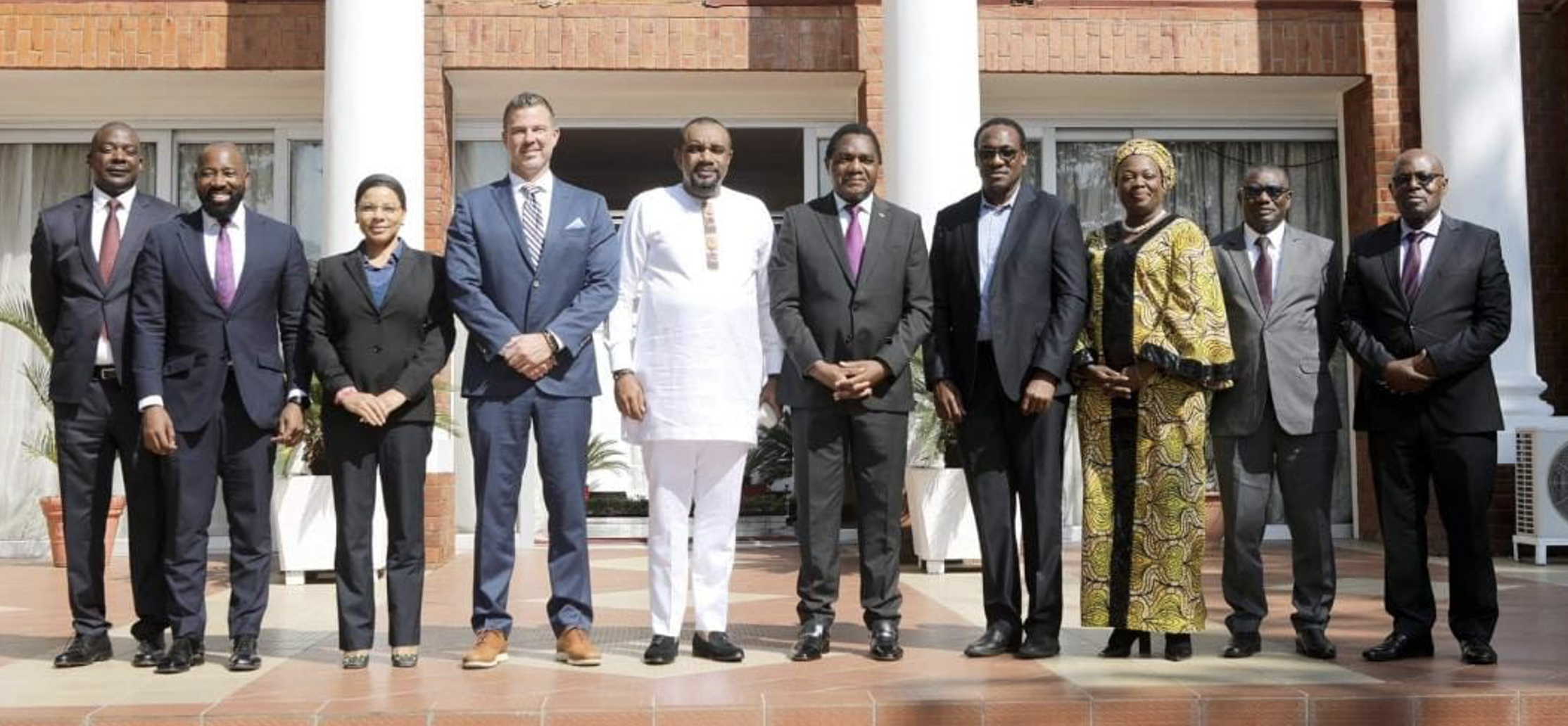
That night, Altris hosted a dinner for everyone involved. There were hugs, laughter, handshakes, and quiet moments of reflection. Toward the end of the evening, Victor pulled me aside to share that we would meet the President of Zambia, Hakainde Hichilema, the following day at State House. It felt like the final punctuation on a story that had taken everything to write.
Reflections on the Flight Home
On the flight home, the exhaustion finally hit. I looked out the window somewhere over the Atlantic, and the dark wing lights against the sky reminded me of those few scattered bulbs in the Malawian villages. The scale was different, but the message was the same: light changes everything.
In less than two months, we had gone from a proposal lost in a war zone to a 25-year PPA with Zambia—a bridge of trust built across cultures, languages, and continents. We had seen firsthand what the absence of power looks like, and what its arrival can mean.
I thought about those dark villages again and the quiet determination in the faces of the people we met. What we’re building isn’t just about technology or infrastructure. It’s about restoring the chance for a better life.
As the plane began its descent toward home, I felt an unexpected calm. We hadn’t just secured a deal. We had proven what Altris was built for: to bring power—literal and figurative—to the places that need it most.